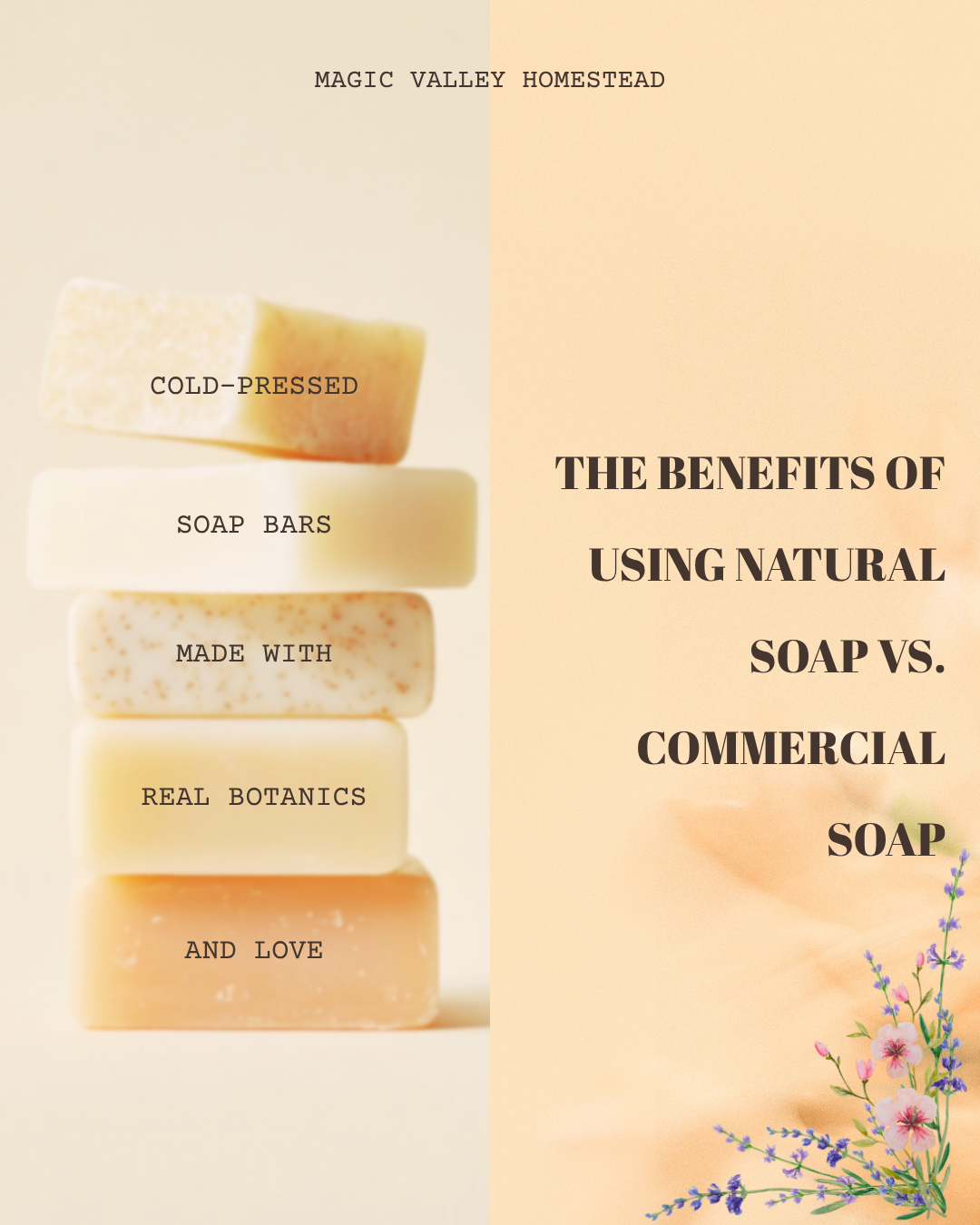
By Magic Valley Homestead
Walk down the soap aisle of any supermarket and you’ll see a rainbow of bars promising everything from “deep moisture” to “germ-free protection.” But if you turn one over and read the label, you’ll often find a list of chemical ingredients that’s hard to pronounce — let alone understand.
The truth is, most of what we call soap on store shelves isn’t actually soap at all. It’s a synthetic detergent bar made with artificial fragrances, chemical preservatives, and harsh surfactants. These ingredients may get you clean, but they can also strip away natural oils, irritate your skin, and pollute waterways. Big companies try to make money fast even if that means cutting corners to do so.
In contrast, natural soap like the handmade bars we create here at Magic Valley Homestead, are made from plant-based oils, butters, clays, and essential oils. It cleanses gently, nourishes deeply, and respects both your skin and the planet.
In this article, we’ll break down the key differences between natural and commercial soaps, the science behind how each works, and the top benefits of choosing natural soap for your skin, your health, and your environment.
🧼 What Is “Natural” Soap, Really?
Let’s start by clarifying what makes a soap “natural.”
True soap is created through a traditional process called saponification — the chemical reaction between fats (like olive oil or coconut oil) and lye (sodium hydroxide). When this reaction is complete, you’re left with soap and glycerin — the moisturizing byproduct that makes handmade bars so gentle and skin-loving. My organic chemistry in college actually come into play on this one.
Natural soap:
- Uses real oils and butters (such as olive, coconut, shea, and avocado oils).
- Is free from synthetic foaming agents (like SLS or SLES).
- Contains natural colorants and essential oils, not artificial dyes or perfumes.
- Retains glycerin, a humectant that keeps skin hydrated.
- Is biodegradable and eco-friendly.
Commercial soap, on the other hand, often:
- Uses synthetic detergents to create extra foam.
- Removes glycerin to use in lotions or other products.
- Relies on chemical preservatives, fillers, and dyes to increase shelf life and cut costs.
- Uses fragrance oils that may contain hundreds of undisclosed ingredients.
In short, commercial soap is made for profit and production, while natural soap is made for people and purity.
💧 1. Natural Soap Is Better for Your Skin’s Health
Your skin isn’t just a covering — it’s a living organ that absorbs much of what you put on it. Using natural soap helps maintain your skin’s natural balance rather than disrupting it.
🌿 Hydrating Instead of Drying
Commercial soaps often contain sodium lauryl sulfate (SLS) or sodium laureth sulfate (SLES) — cheap foaming agents that make a rich lather but strip your skin’s protective oils. This leads to dryness, tightness, and sometimes flaking or itchiness.
Natural soaps, by contrast, are full of glycerin, which acts as a natural humectant. It attracts moisture from the air and locks it into your skin, helping you stay soft and hydrated all day long.
Handmade bars from Magic Valley Homestead retain every drop of this natural glycerin because we never remove it during production. The result? Clean, nourished skin that doesn’t feel tight after washing.
🌼 Rich in Skin-Nourishing Nutrients
Natural oils and butters are loaded with vitamins and antioxidants. For example:
- Olive oil is rich in vitamin E and polyphenols that protect against premature aging.
- Coconut oil is naturally antimicrobial and moisturizing.
- Shea butter contains fatty acids that improve elasticity and soothe irritation.
- Castor oil adds creamy lather and draws moisture into the skin.
Commercial soaps rely on synthetic emollients and petroleum byproducts to mimic these effects — but they can’t provide the same long-term nourishment.
🌸 Gentle Enough for Sensitive Skin
If you’ve ever noticed redness, burning, or itching after washing with a store-bought soap, it’s likely from artificial fragrance or chemical additives. These compounds are among the most common irritants in skincare.
Natural soap avoids harsh synthetics, making it ideal for sensitive skin, children, and people with conditions like eczema or psoriasis. Ingredients like goat milk, oatmeal, calendula, and aloe vera help calm and restore the skin barrier naturally.
🌍 2. Natural Soap Is Better for the Environment
What goes down your drain doesn’t disappear — it enters our water systems. Every time you use a commercial soap filled with synthetic chemicals, those compounds end up in rivers, lakes, and soil.
🌾 Biodegradable Ingredients
Natural soaps use plant-based ingredients that break down easily and safely. Oils, clays, and botanicals return to the earth without leaving harmful residues.
Commercial soaps often include non-biodegradable surfactants and microplastics that can linger in waterways and harm aquatic life.
🐝 No Harsh Chemicals or Artificial Additives
Many commercial products contain triclosan, a synthetic antibacterial agent linked to water pollution and antibiotic resistance. This chemical can disrupt aquatic ecosystems and even harm beneficial bacteria in your own microbiome.
At Magic Valley Homestead, our soaps rely on the natural cleansing and antibacterial power of ingredients like tea tree oil, lavender, and eucalyptus — without the environmental footprint.
🌿 Sustainable and Eco-Friendly Practices
Natural soapmakers (especially small homesteads like ours) tend to focus on sustainability — using:
- Recyclable or compostable packaging.
- Ethically sourced oils and butters.
- Locally grown herbs and flowers.
- Minimal waste production.
When you buy handmade soap, you’re also supporting small-scale, sustainable agriculture and local craftsmanship — not mass production and chemical waste.
🌸 3. Natural Soap Retains Glycerin — the Skin’s Best Friend
Here’s a secret most big soap companies don’t advertise: during the manufacturing process, they remove the glycerinthat naturally forms during saponification. Why? Because it’s valuable. They sell it separately to use in lotions, moisturizers, and cosmetics.
That’s why your commercial bar soap might leave your skin feeling tight or squeaky — the natural moisturizer has been taken away.
In handmade natural soap, glycerin remains in every bar, helping:
- Draw moisture into your skin.
- Prevent dryness and cracking.
- Maintain a soft, healthy glow.
It’s the reason natural soap feels creamy, luxurious, and non-stripping — even for those who wash frequently.
💫 4. Natural Soap Is Customizable for Every Skin Type
One of the biggest benefits of choosing handmade, natural soap is that it’s customizable. Because we use small-batch production, we can create formulas for every skin type and preference.
- Dry skin? Try a shea butter or goat milk bar with honey.
- Oily or acne-prone? Activated charcoal and tea tree help absorb excess oil.
- Sensitive skin? Oatmeal, chamomile, and calendula are soothing and hypoallergenic.
- Normal skin? Olive and coconut oil blends keep things balanced.
Commercial soaps are “one size fits all.” Handmade soap can be personalized, allowing you to choose the ingredients, scents, and textures that suit you best.
🌺 5. Natural Soap Contains Real Scents — Not Synthetic Fragrances
Fragrance is often the hidden danger in commercial soap. The term “fragrance” on a label can legally represent hundreds of undisclosed chemicals, many derived from petroleum or containing phthalates (known hormone disruptors).
In contrast, natural soap uses pure essential oils extracted from flowers, herbs, and citrus peels. These oils not only smell amazing but also offer real aromatherapeutic benefits:
- Lavender calms the mind and soothes skin.
- Peppermint energizes and cools.
- Eucalyptus clears the senses and helps with congestion.
- Lemongrass purifies and refreshes.
Each bar becomes an experience — not just a product.
And because essential oils are naturally antimicrobial and antioxidant-rich, they contribute to the soap’s cleansing power while adding no toxic load.
💚 6. Natural Soap Supports Small Businesses & Ethical Practices
Every handmade bar of natural soap tells a story — not of factory assembly lines, but of craftsmanship, care, and community.
When you buy from a small soapmaker or homestead, you’re supporting:
- Local economies and family-owned farms.
- Ethical ingredient sourcing (like fair-trade shea butter or palm-free recipes).
- Low-waste production methods that value quality over quantity.
At Magic Valley Homestead, we hand-pour every bar, often using herbs, flowers, and oils grown right on our property. Each batch is unique, crafted in small quantities to ensure freshness and attention to detail.
Commercial soap manufacturers focus on profit margins; handmade soapmakers focus on people, quality, and sustainability.
🧴 7. Natural Soap Is Kinder to Your Body’s Microbiome
Your skin hosts trillions of beneficial bacteria that protect you from infections, regulate pH, and support your immune system. Commercial antibacterial soaps disrupt this natural ecosystem by killing both good and bad bacteria.
This can lead to:
- Weakened skin barrier function.
- Increased dryness and irritation.
- Higher susceptibility to certain skin conditions.
Natural soap cleans effectively without destroying your microbiome. Ingredients like coconut oil, essential oils, and clays remove dirt and oil while respecting the skin’s natural flora.
The result? Cleaner, healthier skin that maintains its natural defenses.
🌻 8. Natural Soap Lasts Longer and Feels More Luxurious
Handmade natural soaps are often denser, richer, and longer-lasting than their commercial counterparts. Because they’re cured (dried) for weeks, they’re harder bars that resist dissolving too quickly.
You’ll notice that natural soaps:
- Create a creamy, low-bubble lather instead of harsh foam.
- Feel smooth and conditioning, not squeaky.
- Often contain exfoliating botanicals like oatmeal or poppy seeds.
If you store them properly, on a draining soap dish away from standing water they can last just as long (or longer) than store-bought bars.
💛 9. Natural Soap Can Be an Act of Self-Care
Using natural soap is about more than hygiene, it’s a small, daily act of self-love. When you choose something crafted with intention and care, you’re inviting mindfulness into your daily routine.
The scent of lavender in the morning, the feel of creamy lather after a long day — these are moments of peace in a busy world.
At Magic Valley Homestead, we believe that skincare should be simple, joyful, and rooted in nature. Every bar we make is designed to help you slow down and reconnect with what truly matters: your well-being.
🧠 10. The Long-Term Benefits Add Up
Switching to natural soap isn’t just about immediate results it’s an investment in your skin’s long-term health. Over time, users often notice:
- Fewer breakouts and irritations.
- Softer, smoother skin texture.
- Reduced need for lotions and moisturizers.
- Improved tone and natural glow.
Because natural soap supports your skin’s ecosystem instead of fighting it, it helps restore balance and resilience.
And once you experience that difference — that clean, hydrated feeling without chemicals — it’s hard to go back.
🌺 Final Thoughts: Natural Soap Is Better for You, Inside and Out
When you compare natural soap to commercial soap, the difference is clear — not just in ingredients, but in philosophy.
Commercial soap is built for convenience, mass production, and profit.
Natural soap is built for health, sustainability, and beauty — the kind that starts within.
Every bar of handmade soap represents a return to simplicity: nourishing your skin the way nature intended.
At Magic Valley Homestead, we craft each bar with care using farm-grown botanicals, pure essential oils, and skin-loving oils and butters. Our soaps are free from synthetic fragrances, dyes, and harsh chemicals — because your skin deserves better.
So the next time you reach for a bar, ask yourself:
✨ Do I want to wash with chemicals, or cleanse with nature?
Your skin will know the answer. 🌿
